
Guides24 February 20267 min read
Flexible Stone vs Porcelain Slab: Which Wall Cladding Is Right for Your Project?
Both give you a real mineral wall. They part ways on weight, curves, install time and cost. A side-by-side to settle the specification before the sample arrives.
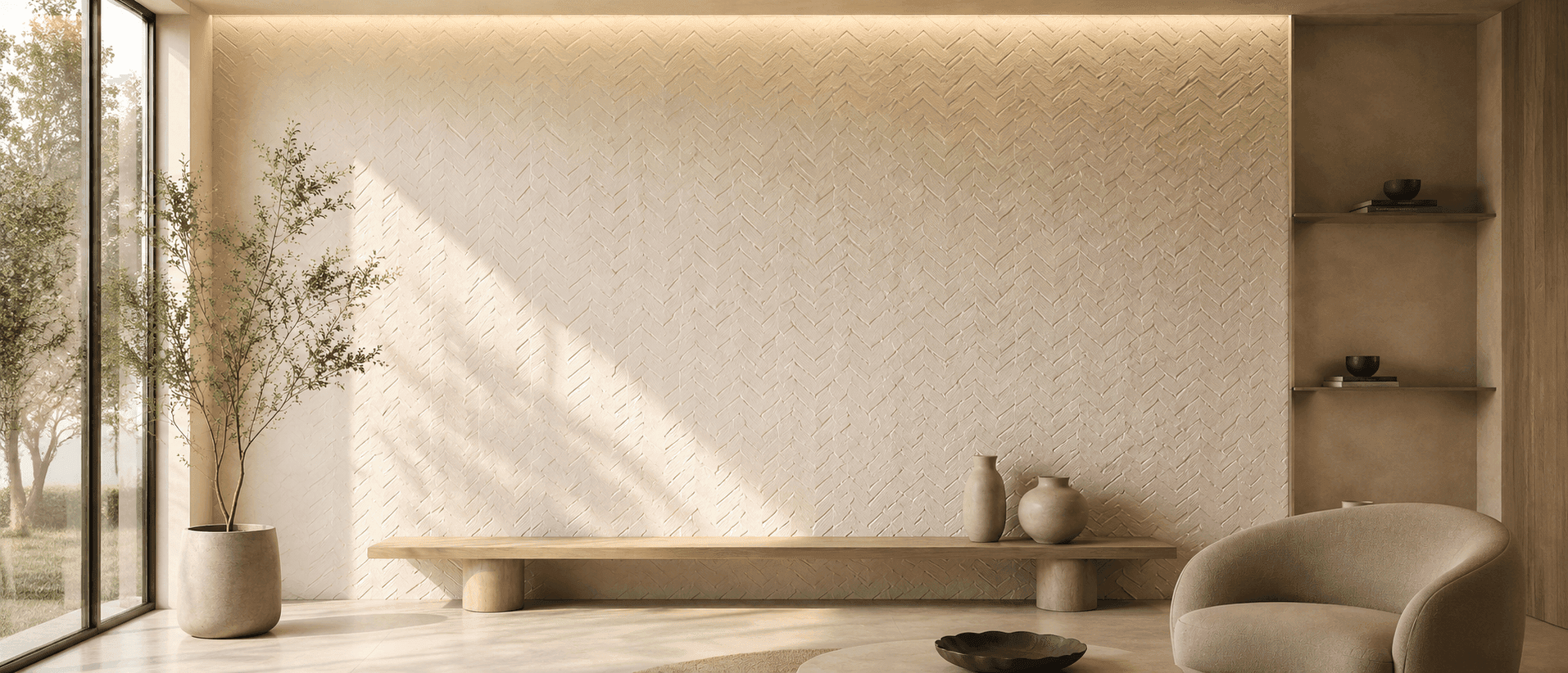
Porcelain slab earned its place: large-format, hard-wearing, faithful to stone. But on a real site the question is rarely 'which looks best' — the samples both convince. It's which one the wall, the budget and the calendar can actually carry.
Weight is the first fork. A porcelain slab runs 25–40 kg per square metre and needs two fitters, suction lifters and a flat substrate. Flexible stone is 3–6 kg — one person, adhesive, straight onto sound plaster or render. On upper floors and over existing finishes, that difference decides the method.
Geometry is the second. Slab is flat by nature; curves mean cuts, mitres and waste. Flexible stone bends to a 300 mm radius, so a column or a curved reception desk is one continuous surface instead of a puzzle of facets.
Where porcelain still wins: floors, worktops and high-abrasion horizontal surfaces. For vertical feature walls, columns, ceilings and fast refits, flexible stone gets the same mineral face to places slab can't reach — for less time on site. Request both samples and decide with the wall in front of you.
- flexible stone vs porcelain slab
- wall cladding comparison
- lightweight stone cladding
- porcelain slab alternative