

Trends21 May 20265 min read
Terracotta Interiors: Why Warm Minimalism Is Replacing Grey
The grey decade is closing. Clay, rust and bone are doing what concrete palettes couldn't — making minimal rooms feel inhabited. Where the terracotta wall works, and where it doesn't.
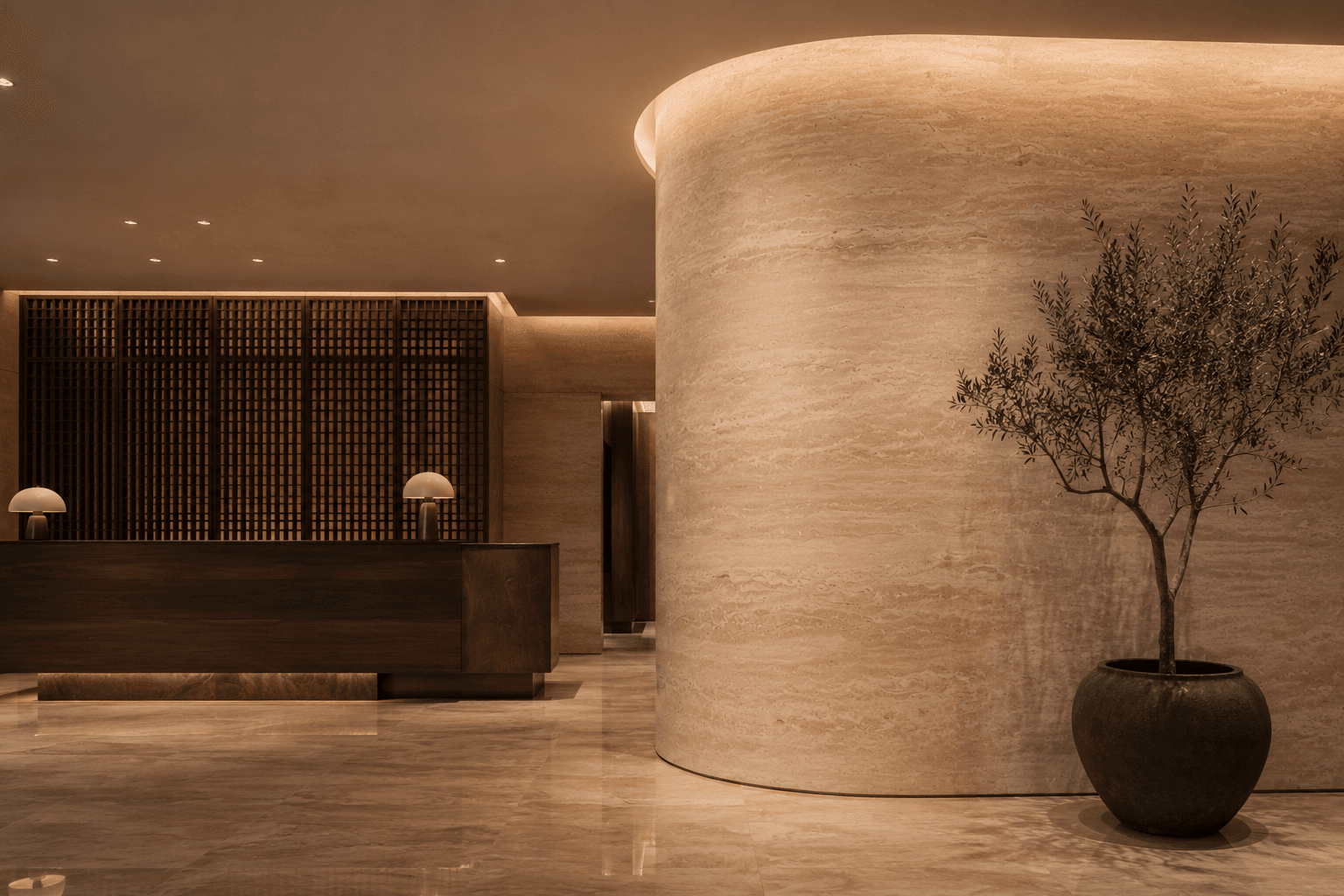
Minimalism never needed to be cold; it just photographed that way. The rooms replacing the grey decade keep the restraint and change the temperature — clay walls, bone ceilings, timber underfoot.
Terracotta works because it behaves like a neutral while carrying warmth. Against espresso joinery it reads as depth; against bone plaster it reads as light. The failure mode is saturation: a terracotta room needs one terracotta gesture, not four.
Material choice decides whether the gesture feels applied or built. Paint gives the colour without the conviction. A ribbed slat wall or a rammed-earth stone surface gives the colour a shadow line — and shadow is what makes warm minimalism read as architecture rather than styling.
- terracotta interior design
- warm minimalism
- earth tone interiors
- interior colour trends 2026